

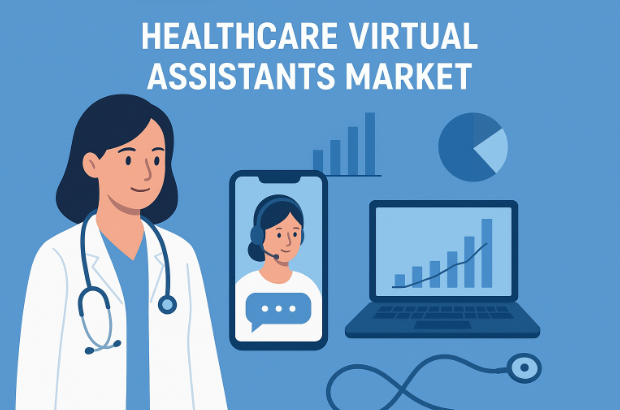
The healthcare landscape is undergoing a silent but seismic shift, driven not by a new miracle drug or a blockbuster merger, but by the rapid, intelligent whispers of virtual assistants. What began as simple chatbots for appointment scheduling has evolved into a sophisticated, multi-billion-dollar ecosystem of AI-powered allies, fundamentally altering the patient-provider dynamic and streamlining the crippling administrative burden on clinical staff. The market for Healthcare Virtual Assistants (HVAs) is exploding, positioning itself as one of the most transformative forces in modern medicine.
According to SNS Insider, The Healthcare Virtual Assistants Market is expected to reach USD 12.99 billion by 2032, growing at a staggering CAGR of 33.24% over the forecast period 2024-2032. This growth is fueled by a perfect storm of necessity and innovation: rising global healthcare costs, severe clinician burnout, an aging population with complex chronic care needs, and the post-pandemic acceleration of digital health adoption.
Beyond Scheduling: The Multifaceted Rise of the HVA
Today’s HVAs are a far cry from their rigid, pre-programmed predecessors. Leveraging Natural Language Processing (NLP), Machine Learning (ML), and voice recognition, they are becoming pervasive across the care continuum:
· On the Patient Front: HVAs like Sensely’s “Molly” or Babylon Health’s AI act as first-line triage, symptom checkers, and medication reminders. They offer 24/7 support for patients with chronic conditions like diabetes or hypertension, providing personalized coaching and alerting human providers to concerning trends. For example, the Mayo Clinic’s partnership with Google to integrate AI into its patient portals has significantly reduced call center volumes and improved pre-consultation data gathering.
· In the Clinical Sphere: For physicians and nurses, voice-enabled assistants like Nuance’s Dragon Ambient eXperience (DAX) are game-changers. DAX listens to natural patient-physician conversations and automatically generates structured clinical notes, reducing documentation time by up to 50%. This directly addresses the leading cause of burnout—administrative burden—freeing up precious time for patient interaction.
· Within Enterprise Operations: Hospital systems are deploying intelligent assistants to manage internal workflows, from inventory tracking of medical supplies to automating prior authorization processes with insurers—a notorious source of delay and frustration.
Market Movers: Strategic Plays Define a Competitive Arena
The race for dominance in this high-growth market is characterized by aggressive R&D investment and strategic mergers and acquisitions, as tech giants and specialized health AI firms vie for position.
The top players shaping the sector include:
· Nuance Communications (A Microsoft Company): A behemoth in clinical speech recognition, its integration with Microsoft’s Azure cloud and AI capabilities has created a formidable end-to-end platform.
· Amazon: With AWS as the backbone for many health systems and Alexa increasingly HIPAA-compliant for specific tasks, Amazon is embedding itself into the home-health ecosystem.
· Google: Through its DeepMind and health AI divisions, Google is focusing on predictive analytics and integrating assistant functionalities directly into electronic health records (EHRs).
· Oracle Cerner: By embedding AI assistants directly into its widely-used EHR system, it ensures HVAs are part of the clinician’s native workflow.
· Specialized Innovators: Companies like Babylon Health, K Health, and Ada Health are building their reputations on patient-facing diagnostic and triage engines, often partnering with insurers and employers to offer direct-to-consumer services.
Investment is pouring in. Venture capital funding for AI in healthcare surpassed $10 billion in recent years, a significant portion dedicated to virtual assistant and conversational AI applications. Simultaneously, M&A activity is consolidating capabilities. Microsoft’s $19.7 billion acquisition of Nuance in 2022 stands as the definitive megadeal, signaling the strategic imperative to own the clinical conversation layer. Smaller, targeted acquisitions are also frequent, as larger players snap up startups with superior NLP algorithms or niche domain expertise in areas like mental health or oncology.
Challenges in the Exam Room: Accuracy, Bias, and the Human Touch
Despite the optimism, the path forward is not without significant hurdles. Regulatory scrutiny from bodies like the FDA (for software as a medical device) and the FTC is intensifying, focusing on data privacy, algorithmic bias, and clinical validation. A high-profile failure of a diagnostic chatbot could erode public trust. Furthermore, the “black box” nature of some AI systems raises concerns about accountability. If an HVA gives flawed advice, who is liable—the developer, the hospital, or the provider?
Perhaps the most critical challenge is integration. The most advanced HVA is useless if it doesn’t seamlessly integrate with legacy EHR systems like Epic or Cerner. Interoperability remains a holy grail. Moreover, the industry is mindful of not replacing the human touch. The goal, emphasizes Dr. Jane Harper, Chief Innovation Officer at a leading Boston hospital, “is augmentation, not replacement. The virtual assistant handles the mundane, the repetitive, the administrative. This allows our caregivers to do what only humans can: provide empathy, make complex ethical judgments, and hold a patient’s hand.”
The Road to 2032: Personalized, Proactive, and Ubiquitous
As the market charges toward that $12.99 billion valuation, the next generation of HVAs will be defined by greater personalization and proactivity. Future assistants will not just respond to queries but predict needs based on continuous health data from wearables and IoT devices. They will manage mental health with greater nuance, provide companionship for the elderly, and offer multilingual support to bridge health disparities.
The explosive growth of Healthcare Virtual Assistants signifies more than a financial trend; it represents a fundamental re-engineering of healthcare delivery. By acting as intelligent intermediaries, these tools promise a future where patients are more empowered, providers are more present, and the entire system operates with unprecedented efficiency. The question is no longer if virtual assistants will become standard in healthcare, but how quickly the industry can navigate the ethical and practical challenges to fully harness their life-changing potential.