

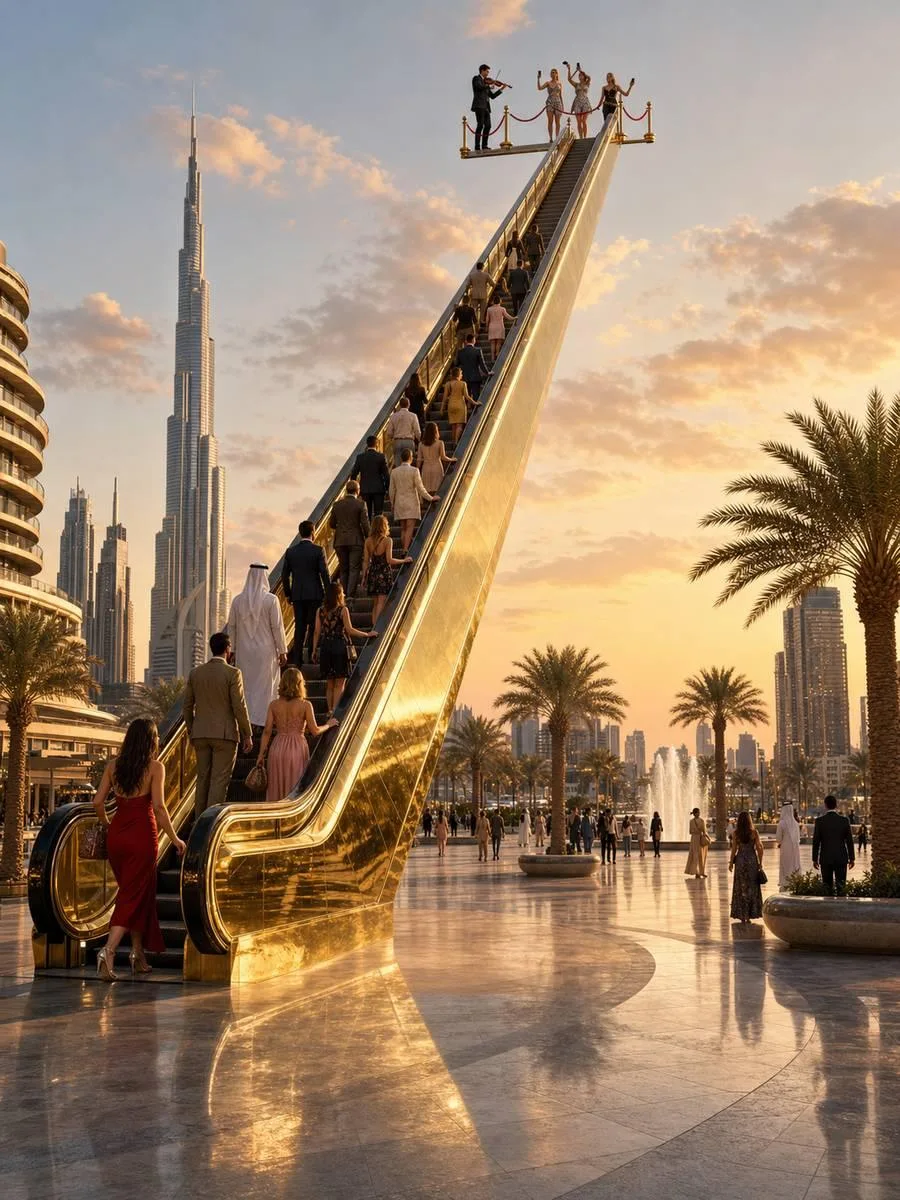
Some games ask whether you can save the kingdom. Mayors of the World asks whether you can save City Hall after somebody has approved a golden escalator to nowhere. The funny political game is available through Mayors of the World on Google Play, while its official game website introduces the wider idea: run a living city, answer international calls for help and try to leave a legacy that does not require a public inquiry.
Comedy That Starts Before the Text
The humour works because the pictures deliver the first punchline. You may see pensioners boarding a rocket, a tiger relaxing on a Manhattan terrace or officials operating industrial equipment beside the Trevi Fountain. Before the explanation appears, the player already understands that an ordinary municipal meeting has gone terribly wrong.
The player is rarely offered one saintly answer and two obviously foolish alternatives. Each response protects something and risks something else: money, public confidence, safety, reputation or the chance to build a memorable project. The mayor may reject a profitable spectacle, accept it with conditions or lean into the madness and hope the voters appreciate bold leadership.
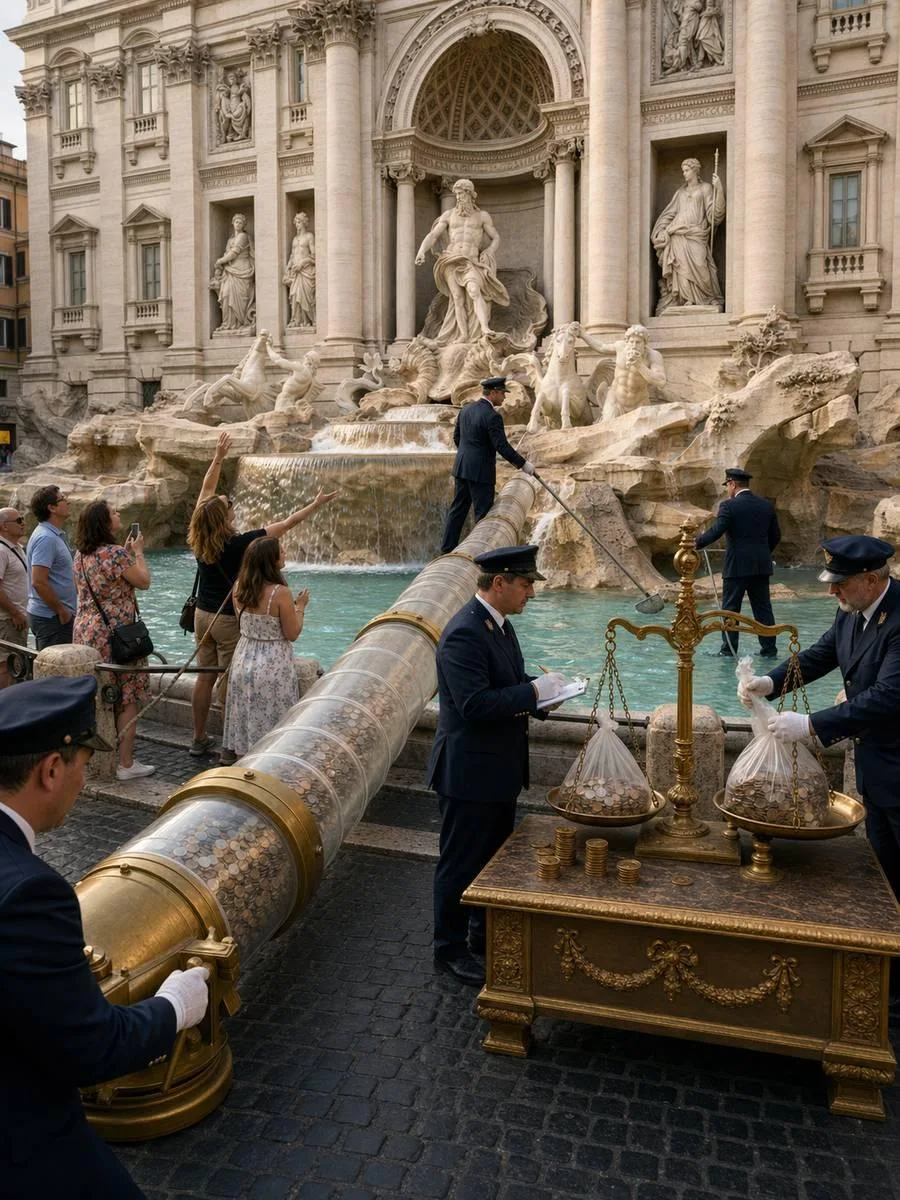
Rome discovers that counting the Trevi Fountain’s coins can become a remarkably serious government operation.
That structure turns comedy into gameplay. A joke is not merely something the player reads; it is something the player must govern. Even the most ridiculous situation can create consequences, and a sensible decision can produce an outcome nobody expected. The laughter comes with responsibility attached.
A Passport Full of Municipal Nonsense
New York City remains the administration’s home base, with its budgets, citizens, political heat, projects and unmistakable appetite for chaos. Yet the Global Mayor route makes the game feel like an international hotline for leaders who have run out of better ideas.
Buenos Aires can ask for investment and cleaner water around Puerto Madero. Sydney may want advice about its Opera House precinct—or a faster way to reach the United States. Corfu brings heritage restoration, government frustration and the sort of rubbish problem that can be smelled before the email is opened. Athens raises clean-air questions near the Acropolis, while Rio de Janeiro imagines an extraordinary marina beneath Sugarloaf Mountain.
The calls keep coming. Cape Town, Istanbul, Porto, Alicante and Bangkok present tourism, transport and urban-renewal dilemmas. Dubai specialises in ideas that appear to have escaped from a luxury brochure. Tokyo can turn politeness into gridlock, while Mumbai and New Delhi place family policy, older residents and investment decisions inside visual scenes designed to be understood instantly.
Kuala Lumpur, Seoul, Singapore, Florianópolis, Vitória and Vigan add more personalities to the world tour. Rome, Paris, Amsterdam, Lagos and Mexico City bring landmarks that players recognise immediately, then place something so inappropriate beside them that the political question becomes impossible to ignore.
This is not a geography lesson disguised as a menu. The cities matter because each one changes the flavour of the dilemma. Tourism carries different risks in Bangkok and Corfu. Clean-air policy feels different in Athens and New Delhi. A tax incentive in Dubai sends a different message from one offered in Porto or Buenos Aires. The game uses travel, satire and genuine urban questions to keep the next decision unpredictable.
Why the Choices Stay Interesting
Four numbers keep the mayor honest: Citizens, City Bank, City and Heat. A generous answer can please residents while damaging the budget. A glamorous project may improve the city but raise political scrutiny. A bargain that looks financially brilliant might produce exactly the photograph an opponent needs during the next election.
The timer matters too. Players cannot treat every scene like a legal examination. They must absorb the image, read the options and commit. The pace gives each decision a small physical charge, especially when the obvious answer begins to look less obvious with only a few seconds remaining.
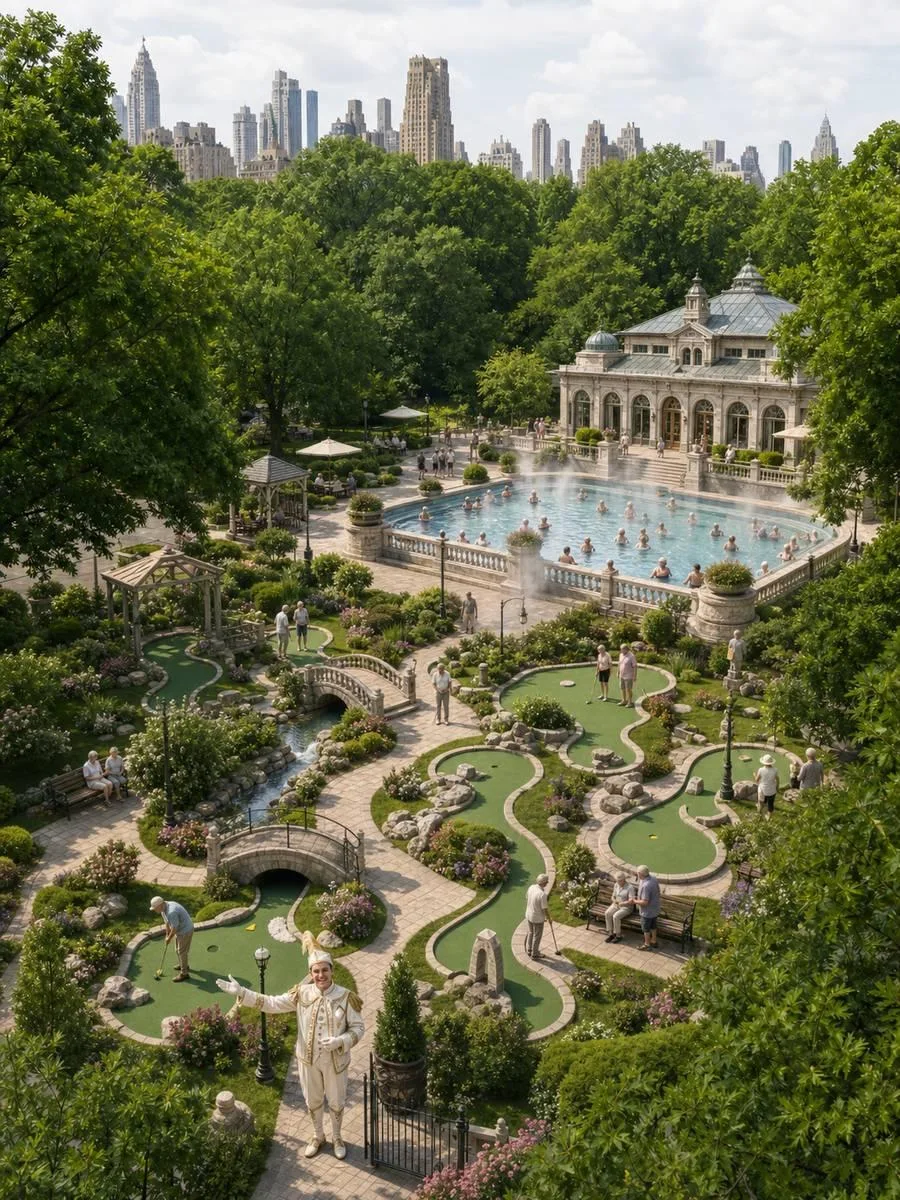
New York’s green initiative becomes a lavish public park, spa and miniature-golf wonderland.
A City That Remembers What You Did
The Mayor’s Inbox prevents the world from feeling like a collection of disposable cards. People write before and after important events. Advice can foreshadow a coming problem, correspondents can react to the mayor’s behaviour and delayed consequences can return after the player has mentally filed a decision under “probably fine.”
That memory creates some of the game’s best humour. A mayor can confidently solve a problem, move on and later receive evidence that the solution has developed ambitions of its own. The inbox also provides quieter moments between crises, allowing characters, Karma and personal relationships to grow without stopping the main game.
Projects and transformations become part of the mayor’s Legacy. Instead of disappearing after a score calculation, successful improvements remain visible as achievements. A restored waterfront, renewed park or repaired historic district provides a satisfying contrast to the scandals, animals and impossible infrastructure surrounding it.
Why This Funny Game Has Real Staying Power
Mayors of the World understands that satire works best when the player cares about the outcome. Its humour attracts attention, but the persistent city, elections, finances, Cabinet, Inbox, delayed consequences and international reputation provide reasons to continue. Players are not only hunting for the next joke. They are discovering what kind of mayor their choices have created.
The game is also naturally shareable. A tiger on a luxury balcony or a gold escalator aimed at the sky can make sense as a visual joke without a long explanation. Add the question “What would you do?” and the screenshot becomes a challenge between friends. People can laugh at the same scene while arguing sincerely about the correct response.
Players looking for games with political choices, resource pressure and consequences may recognise elements of Reigns, Suzerain, Tropico, Democracy 4 and Yes, Your Grace. Mayors of the World distinguishes itself through its international landmarks, rapid decisions and unapologetically funny civic disasters—proof that governing the world is difficult, but governing it with a straight face may be impossible.