

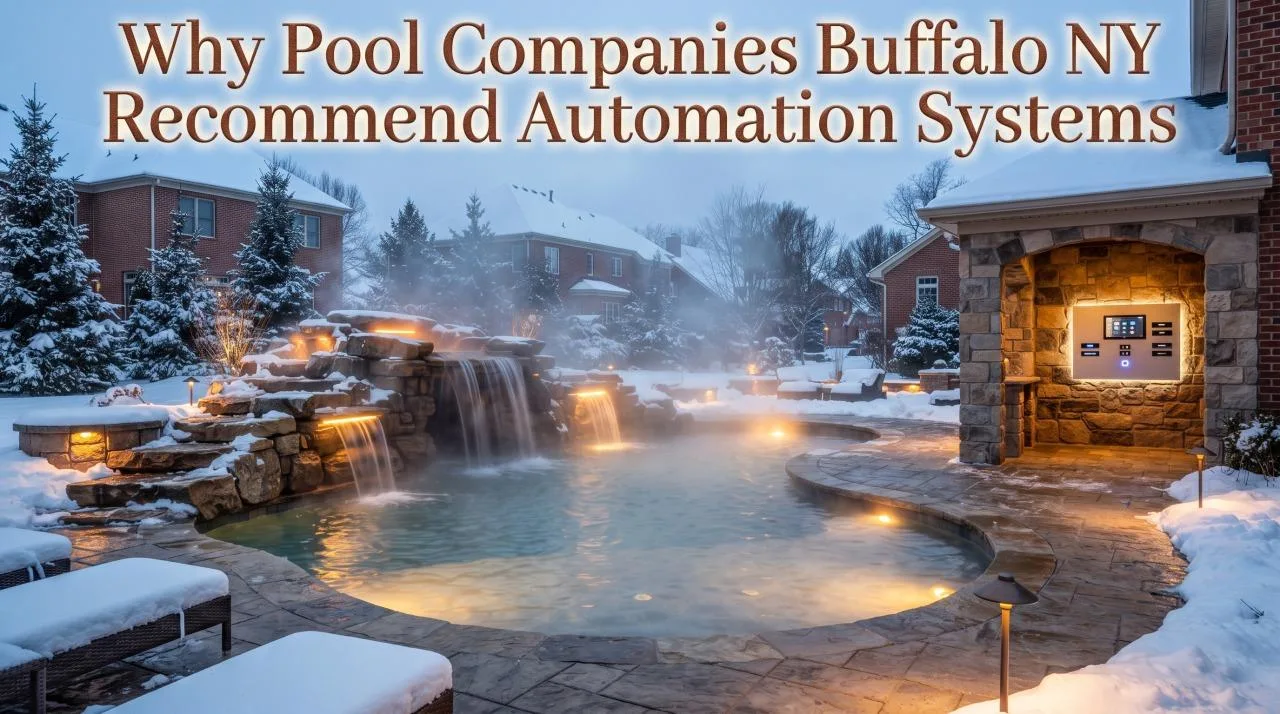
Owning a swimming pool should be about enjoying time in the water, relaxing outdoors, and making the most of your backyard. However, keeping a pool clean, balanced, and ready to use requires consistent attention. Owners must manage pumps, filtration schedules, lighting, water chemistry, heating, and other equipment to maintain a comfortable swimming environment. For homeowners with busy schedules, coordinating these tasks manually can quickly become inconvenient.
Pool automation systems offer a way to simplify many of these responsibilities. By connecting compatible pool equipment to a centralized controller, homeowners can manage essential functions through a control panel, smartphone app, or scheduled program. Depending on the system, automation may include pump operation, lighting, heating, water features, and certain sanitation functions.
For homeowners in Western New York, automation can be especially useful because pool ownership often involves seasonal opening and closing procedures, changing outdoor temperatures, and careful equipment management throughout the swimming season. These practical considerations help explain why pool companies buffalo ny homeowners consult may recommend automation when designing a new pool or upgrading an existing one.
Understanding how these systems work, what they cost, and which features matter most can help homeowners decide whether automation is a worthwhile investment.
What Is a Pool Automation System?
A pool automation system is a control platform that allows multiple pool components to operate together. Instead of adjusting every piece of equipment independently, the owner can use one interface to manage compatible devices and create operating schedules.
Basic systems may control a pump, heater, and lighting. More advanced setups can coordinate additional equipment, including salt chlorine generators, water features, valves, and certain cleaning systems. The exact capabilities depend on the controller, equipment compatibility, and installation configuration.
Some systems use a dedicated control panel installed near the pool equipment. Others offer wireless access through a mobile application, allowing homeowners to make adjustments without walking to the equipment pad. Remote access generally requires a suitable internet connection and compatible hardware.
Automation does not eliminate every maintenance task. Pool owners still need to inspect equipment, clean the pool, test water chemistry, and address repairs. Instead, automation reduces the amount of repetitive manual operation required to keep the system running according to a planned routine.
How Automation Makes Pool Maintenance Easier
One of the main advantages of pool automation is convenience. Pool equipment often needs to run on a regular schedule, and some functions must be adjusted as weather, usage, and water conditions change. Automation helps coordinate those tasks without requiring the owner to operate every control manually.
Scheduled Pump and Filtration Operation
The circulation pump moves water through the filtration system, helping remove debris and distribute treated water throughout the pool. How long it should operate depends on factors such as pool size, pump type, filter design, water temperature, and swimming activity.
With an automation controller, homeowners can establish pump schedules and adjust them when needed. Variable-speed pumps may offer additional flexibility because they can operate at different speeds for different tasks. For example, a lower speed may be appropriate for routine circulation, while a higher speed may be required for certain cleaning equipment or water features.
The goal is to operate the system according to the pool’s actual requirements rather than relying on a schedule that never changes. Proper programming can help reduce unnecessary operation, although energy savings depend on the equipment and settings.
Simplified Water Temperature Control
For homeowners who use a pool heater or heat pump, automation can make temperature management more convenient. Compatible systems can allow users to set a target temperature and coordinate heating with pump operation.
This can be particularly helpful when outdoor temperatures fluctuate. Owners may prefer a warmer pool during a cool stretch and different settings during hotter weather. A centralized controller can make those adjustments easier.
Heating costs still depend on the type of heater, the desired temperature, pool size, insulation, wind exposure, and how often the pool is used. Automation makes control easier, but it does not remove the energy required to heat the water.
Lighting and Water Features
Pool lighting can influence both the appearance and usability of an outdoor space after sunset. Automation systems can allow homeowners to turn compatible lights on and off, set schedules, and select available lighting effects.
Waterfalls, deck jets, and other water features can also be integrated into some systems. Instead of operating separate switches, homeowners may be able to activate several features through one interface.
For families who entertain frequently, this coordination can make the pool area easier to prepare for gatherings. It also helps ensure that lights and water features are not left running longer than necessary.
Why Automation Can Be Useful in Buffalo’s Climate
Western New York presents specific considerations for outdoor pool ownership. Summers provide opportunities for swimming and outdoor entertaining, while colder seasons require careful preparation and protection of pool equipment.
Automation cannot replace seasonal maintenance, but it can help owners manage the pool more consistently during periods of use.
Adjusting to Changing Temperatures
Air temperature can change considerably throughout the swimming season. These fluctuations may affect water temperature, heating requirements, and how frequently the pool is used.
A compatible automated system makes it easier to adjust pump schedules, heating settings, and other functions as conditions change. Some advanced systems also provide temperature readings or equipment status information, giving homeowners more visibility into how the pool is operating.
Owners should remember that temperature sensors and app readings have limitations. They are useful for monitoring, but they do not replace direct inspection or professional service when equipment appears to be malfunctioning.
Preparing for Seasonal Pool Closures
Many outdoor pools in Buffalo and surrounding communities are closed during the colder months. Winterization typically involves preparing plumbing, protecting equipment, managing water levels according to the pool design, and following the manufacturer’s instructions for seasonal shutdown.
Automation may simplify some pre-closing tasks, such as turning off scheduled equipment or coordinating compatible components. However, it does not winterize the pool by itself. Plumbing and equipment still require the appropriate physical preparation to reduce the risk of freeze damage.
Before winter, homeowners should review the controller’s shutdown requirements and make sure automatic schedules will not activate equipment unexpectedly. The pool professional responsible for winterization can explain which components should remain powered and which should be disconnected.
Supporting Spring Pool Opening
Opening a pool after winter often involves inspecting equipment, restoring circulation, checking water chemistry, and confirming that controls work correctly. An automation system can make it easier to restart compatible equipment and restore the schedules used during the swimming season.
It is still important to inspect the system before starting it. Pumps, heaters, filters, valves, and electrical components should be checked as appropriate, and water chemistry should be brought into the recommended range before swimming.
A well-organized control system can make the transition from seasonal closure to regular operation smoother, particularly for homeowners who want to establish consistent routines from the beginning of the season.
Energy Efficiency and Potential Cost Savings
Pool automation is often discussed as a way to improve energy efficiency. The potential benefit comes from coordinating equipment operation, reducing unnecessary run time, and using compatible devices according to their actual needs.
For example, a variable-speed pump controlled through an appropriate schedule may be able to provide sufficient circulation at a lower speed for much of the day. Since pump energy use can change substantially with operating speed, the right combination of pump technology and programming may reduce electricity consumption.
Automation can also help prevent pool lights, water features, or heating equipment from operating longer than intended. These savings are not automatic, however. A poorly configured system can still waste energy, and an automation upgrade may not produce meaningful savings if the existing equipment is already efficient and well managed.
Homeowners should consider the total cost of ownership rather than focusing only on the advertised features. Ask about the controller’s price, installation labor, compatible equipment, electrical requirements, and any ongoing service costs. Compare those expenses with the expected convenience and potential operating savings.
A professional assessment can help determine whether automation is likely to make a measurable difference for a particular pool.
Improving Safety and Equipment Monitoring
Pool automation can make certain operations easier to control, but it should be viewed as a convenience and management tool rather than a replacement for physical safety measures.
Some systems provide alerts or status information when connected equipment experiences a problem. Depending on the model, homeowners may be able to see whether a pump is running, check temperature readings, or receive notifications about selected functions.
This information can help owners notice issues sooner, although not every controller monitors every possible failure. A system may not detect a leak, identify every circulation problem, or recognize unsafe water chemistry.
Automation can also help manage lighting schedules and control compatible features, but it does not replace proper fencing, self-closing gates, compliant barriers, supervision, or other required pool safety measures. Remote controls should be secured, and children should not be given unsupervised access to equipment settings.
For electrical work, equipment installation, and repairs, homeowners should use qualified professionals who understand the relevant pool and electrical requirements.
Choosing the Right Features for Your Pool
Not every homeowner needs a fully integrated system. The most suitable setup depends on pool size, existing equipment, desired convenience, and the owner’s budget.
Basic Automation for Essential Equipment
A basic controller may be sufficient for homeowners who mainly want to coordinate a pump, heater, and pool lights. This can reduce the number of separate controls they need to operate.
Basic systems may also provide an easier path to automation for an existing pool, particularly when the current equipment is compatible with a straightforward upgrade.
Before choosing a controller, confirm that it supports the specific pump and heater models already installed. Equipment that uses proprietary communication protocols may require a particular controller or additional interface hardware.
Advanced Automation for Multiple Features
Homeowners with more complex pools may benefit from a system that manages several pumps, multiple lighting circuits, heating equipment, water features, and compatible chemical management devices.
A centralized interface can make a larger setup easier to coordinate. For example, a homeowner might create a preferred operating schedule that combines circulation and lighting settings, then make adjustments when hosting guests.
Advanced systems can cost more to install and configure. Consider whether the additional features will genuinely be used, rather than paying for capabilities that provide little practical value.
Smartphone Access and Remote Control
Mobile access can be convenient when homeowners want to make adjustments from inside the house or while away. Depending on the system, an app may allow them to change temperatures, adjust schedules, or check equipment status.
Remote access depends on connectivity, compatible hardware, and the manufacturer’s software support. Before purchasing, ask whether the app requires a subscription, whether firmware updates are available, and what happens if the internet connection fails.
Essential pool functions should remain manageable in accordance with the equipment manufacturer’s instructions, even when remote connectivity is unavailable.
What to Ask Before Installing Pool Automation
A successful automation upgrade begins with a clear understanding of the existing pool setup and the owner’s priorities. Before approving an installation, discuss the following details with the contractor.
- Equipment compatibility: Which existing components can the system control, and which require replacement or additional hardware?
- Installation requirements: Will the project need new wiring, electrical work, control panels, or communication cables?
- Total cost: Does the quote include equipment, programming, labor, configuration, and any required accessories?
- Ease of use: Can the homeowner operate common functions without navigating complicated menus?
- Future upgrades: Can the controller accommodate additional equipment if the pool is expanded later?
- Warranty and support: Who handles troubleshooting, repairs, software questions, and warranty claims?
- Seasonal operation: How should the system be configured for opening, normal use, and winterization?
A detailed discussion can help prevent misunderstandings about what the system can do. It also gives homeowners a chance to prioritize features that matter most instead of paying for an unnecessarily complicated setup.
Is Pool Automation Worth the Investment?
Whether automation is worthwhile depends on how the pool is used and how much time the owner currently spends managing equipment. For some households, the main benefit is convenience. For others, the ability to coordinate pump speeds, heating, lighting, and water features may be equally important.
Automation may be especially appealing to homeowners who use their pools frequently, have several pieces of compatible equipment, or want more consistent control over operating schedules. It can also be useful when pool management involves repeated adjustments throughout the week.
On the other hand, a small pool with simple equipment and a straightforward maintenance routine may not require an advanced system. A basic controller, or even the existing equipment controls, may already meet the owner’s needs.
The most useful approach is to compare the cost of installation with the time saved, the features gained, and any realistic operating savings. A qualified pool professional can explain the available options and identify the level of automation that fits the property.
FAQs
Can an automation system control every part of a swimming pool?
No. Control capabilities depend on the automation platform, equipment compatibility, and installation. Many systems manage pumps, heaters, lights, and selected water features, but not every component can necessarily be integrated.
Does pool automation reduce electricity costs?
It can help reduce unnecessary equipment operation and improve scheduling, especially when paired with an efficient variable-speed pump. Actual savings depend on equipment, programming, usage, and energy rates. Automation alone does not guarantee lower bills.
Can I add automation to an existing pool?
In many cases, yes. The feasibility depends on the age and type of the existing equipment, electrical configuration, and controller compatibility. A professional assessment can identify what can be retained and what may need an upgrade.
Does automation make pool maintenance unnecessary?
No. Owners still need to clean the pool, test and balance water chemistry, inspect equipment, and arrange repairs when necessary. Automation helps manage selected functions but does not eliminate routine maintenance.
Is smartphone control necessary?
No. Smartphone access is a convenience rather than a requirement. Some homeowners prefer a local control panel, while others appreciate remote adjustments and alerts. Choose the interface that best fits your habits and budget.
Will an automation system protect my pool equipment during winter?
Automation can help manage schedules and selected shutdown functions, but it cannot replace proper winterization. In Buffalo’s climate, plumbing, pumps, filters, heaters, and other equipment must be prepared according to the pool design and manufacturer’s instructions.
Conclusion
Pool automation systems give homeowners more convenient control over the equipment that keeps a swimming pool operating. From pump schedules and heating settings to lighting and water features, the right system can simplify daily tasks and help coordinate compatible components. In Buffalo, where outdoor pools require seasonal preparation and careful management during the swimming months, these capabilities can be particularly useful.
The best solution depends on the pool’s existing equipment, the homeowner’s priorities, and the budget available for installation. Some properties benefit from a basic controller, while more complex pools may justify a fully integrated platform. By confirming compatibility, understanding the total cost, and selecting features that will actually be used, homeowners can make a more informed decision about whether automation belongs in their pool design or upgrade plan.