

The rapid acceleration of digital transformation has placed unprecedented demands on data infrastructure worldwide. Enterprises today must process massive volumes of data generated by cloud computing, artificial intelligence, Internet of Things (IoT), and edge applications, all while maintaining speed, scalability, and reliability. Traditional brick-and-mortar data centers, though robust, often struggle to keep pace with these evolving requirements due to long construction timelines, high capital expenditure, and limited flexibility. In this context, modular data centers have emerged as a transformative approach, fundamentally reshaping how organizations design, deploy, and scale their digital infrastructure.
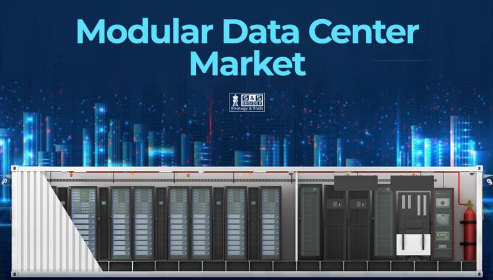
Modular data centers are pre-engineered, prefabricated units that can be rapidly deployed and expanded as demand grows. Unlike conventional facilities that require years of planning and construction, modular designs allow organizations to add capacity in standardized blocks. This modularity enables a more agile infrastructure strategy, aligning data center growth with real-time business needs rather than long-term projections that may become obsolete. As digital workloads fluctuate and expand unpredictably, this flexibility has become a critical advantage.
One of the most significant ways modular data centers are reshaping digital infrastructure is through speed of deployment. In a digital economy where time-to-market can determine competitiveness, the ability to commission data center capacity within weeks rather than months or years is invaluable. Prefabricated modules are manufactured off-site under controlled conditions, reducing construction delays caused by weather, labor shortages, or on-site constraints. Once delivered, these modules can be assembled and made operational quickly, enabling organizations to respond swiftly to new digital initiatives, regulatory requirements, or market expansions.
Scalability is another defining factor driving the adoption of modular data centers. Modern digital infrastructure must accommodate rapid growth in data consumption, particularly from AI training models, real-time analytics, and high-performance computing workloads. Modular architectures allow organizations to scale incrementally, adding capacity only when required. This approach minimizes the risk of overprovisioning and underutilized assets, which are common challenges in traditional data center planning. By aligning infrastructure expansion with actual demand, businesses can optimize capital efficiency while maintaining performance and reliability.
In the middle of this transformation, market dynamics clearly reflect the growing importance of modular data centers. The Modular Data Center Market was valued at USD 25.3 Billion in 2023 and is expected to reach USD 111.3 Billion by 2032, growing at a CAGR of 17.93% from 2024–2032. This strong growth trajectory underscores how rapidly organizations across industries are embracing modular approaches to meet their infrastructure needs. The market expansion is driven by increasing cloud adoption, rising data traffic, and the growing need for edge computing facilities closer to end users. As enterprises modernize their IT ecosystems, modular data centers are increasingly viewed not as a niche alternative, but as a core component of future-ready digital infrastructure. Their ability to support diverse workloads while maintaining consistency and reliability is positioning them as a preferred choice for both established enterprises and emerging digital-native organizations.
Beyond scalability and speed, modular data centers are reshaping digital infrastructure through improved efficiency and standardization. Prefabricated modules are designed using repeatable blueprints, which enhances predictability in performance and operational outcomes. Standardization reduces the likelihood of design flaws and integration issues that often arise in custom-built facilities. It also simplifies maintenance and upgrades, as components and layouts follow consistent specifications. This repeatability is particularly beneficial for organizations operating multiple data center sites across regions, as it enables uniform performance and easier management.
Energy efficiency and sustainability considerations further reinforce the role of modular data centers in modern infrastructure strategies. As data centers account for a growing share of global energy consumption, organizations are under pressure to improve efficiency and reduce environmental impact. Modular designs often incorporate optimized airflow management, efficient power distribution, and compact footprints that reduce energy waste. Their ability to be deployed closer to data sources also supports edge computing use cases, minimizing latency and reducing the energy costs associated with long-distance data transmission. In an era where sustainability metrics influence investment and regulatory decisions, these advantages are becoming increasingly important.
Modular data centers are also influencing how organizations approach geographic expansion and resilience. Their portability and adaptability make them suitable for deployment in diverse environments, including remote locations, urban areas with space constraints, and regions with limited infrastructure. This versatility supports business continuity strategies by enabling decentralized data processing and reducing reliance on a small number of large facilities. As digital services become mission-critical across sectors such as healthcare, finance, manufacturing, and government, resilient and distributed infrastructure models are gaining prominence.
From a strategic perspective, modular data centers are reshaping decision-making around infrastructure investment. Instead of committing to large upfront capital expenditures, organizations can adopt a phased approach that aligns spending with growth milestones. This financial flexibility is particularly attractive in volatile economic conditions, where demand forecasting is challenging. By reducing risk and improving predictability, modular data centers support more agile and resilient digital strategies.
In conclusion, modular data centers are redefining the foundation of modern digital infrastructure. Their impact extends beyond technical design, influencing how organizations think about scalability, efficiency, resilience, and long-term growth. As data continues to drive innovation and competitiveness, the shift toward modular, flexible, and standardized infrastructure models is likely to accelerate. In reshaping how data centers are built and deployed, modular data centers are not merely an alternative to traditional facilities—they are becoming a cornerstone of the digital future.